
Service
Plumbing in Dénia, Jávea and surroundings
We do the plumbing for bathrooms, kitchens and whole homes: new hot and cold pipework, waste runs with the right fall, isolation valves where they belong and concealed taps that are not dripping three months later. We work with multilayer and PPR pipe, and we pressure-test everything before a single tile goes on.
We do not do emergency call-outs for a leak on a Sunday night. What we do is the complete installation as part of a renovation, done once and built to last for years.
What does this service include?
Pipework replacement
We strip out the old iron or copper and run new multilayer or PPR pipework from the main stopcock to every outlet.
New water points
Feeds for the shower, a double basin, a wall-hung WC, the dishwasher, a washing machine on the terrace or an outside tap in the garden. Where you need them, not where they happened to be.
Waste runs and falls
PVC stacks and branch pipes laid to the correct fall, accessible traps and a linear or central shower drain to suit the tray.
Isolation valves per room
Angle valves at every appliance and a stop valve for each bathroom and kitchen, so changing a tap does not mean shutting off the water to the whole house.
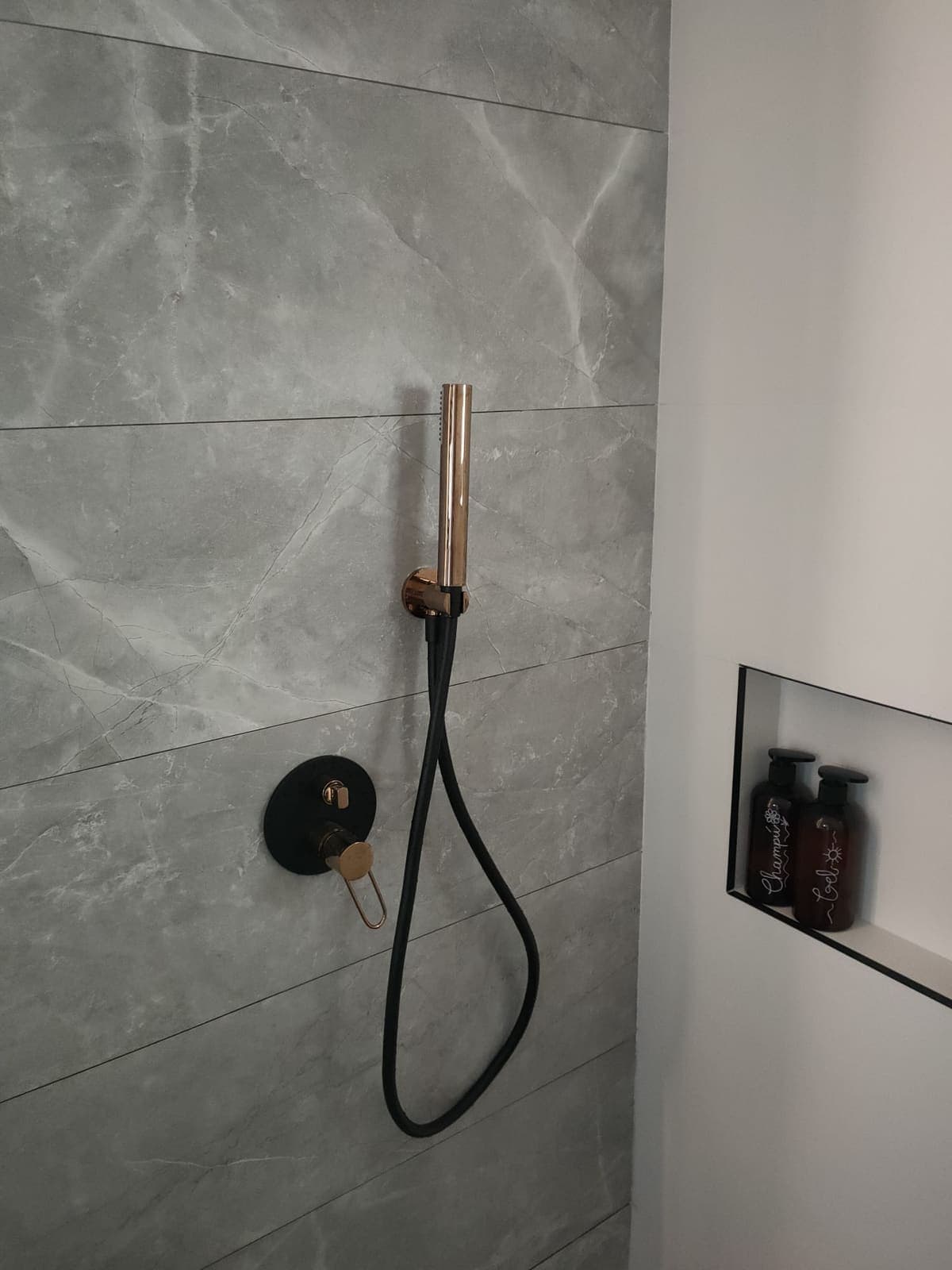
Concealed taps
Built-in shower and bath valve bodies set level and at exactly the right depth for the tiling, so the trim plates sit flush with no gaps.
Hot water
Connection of an electric water heater, aerothermal hot-water cylinder or boiler, with safety valve, expansion vessel where needed and a return loop in larger homes.
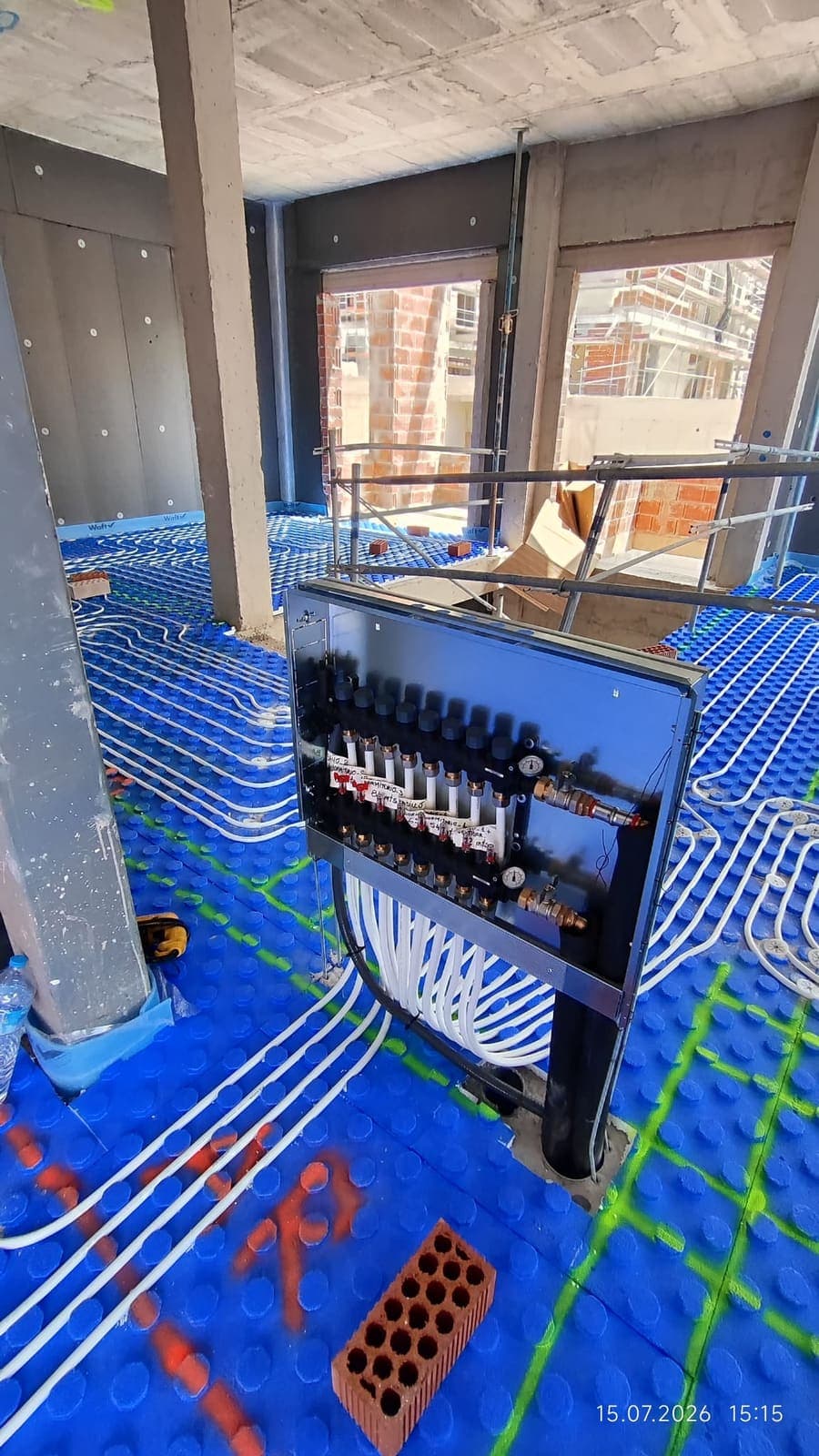
Pressure testing
Before anything is covered up, we charge the system and check it holds the test pressure with no loss. No test, no tiling.
Sanitaryware fitting
Wall-hung WCs on frames, basins, shower trays, baths and screens, all connected and sealed.
Jobs we do regularly
Complete bathroom plumbing
Pipework, waste runs, WC frame, concealed taps and sanitaryware as part of a bathroom renovation.
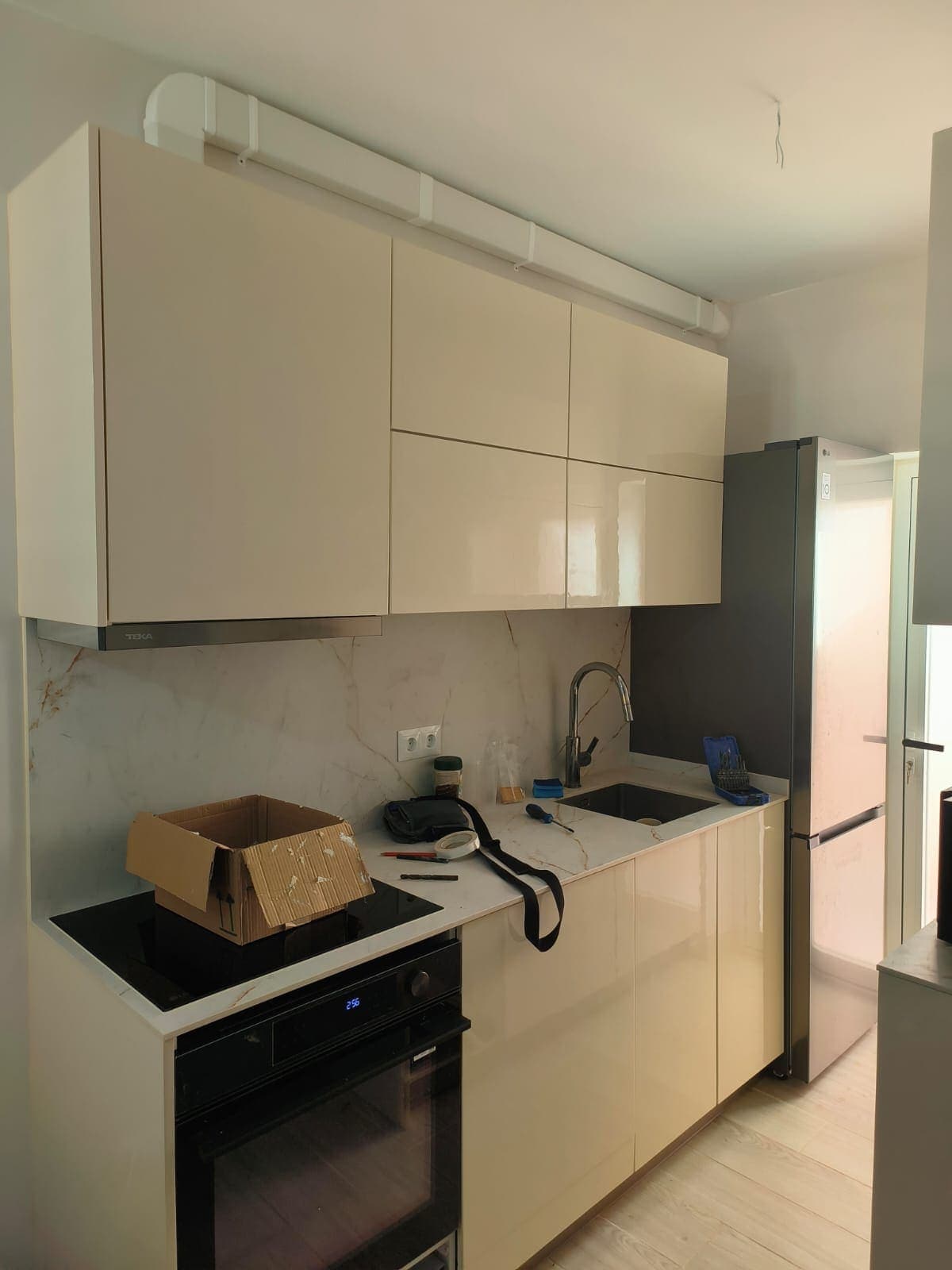
Kitchen plumbing
Feeds for the sink, dishwasher and a reverse-osmosis tap, with the waste relocated if the layout changes.
Whole-house repiping
Full replacement of the water supply and waste network as part of a complete renovation.
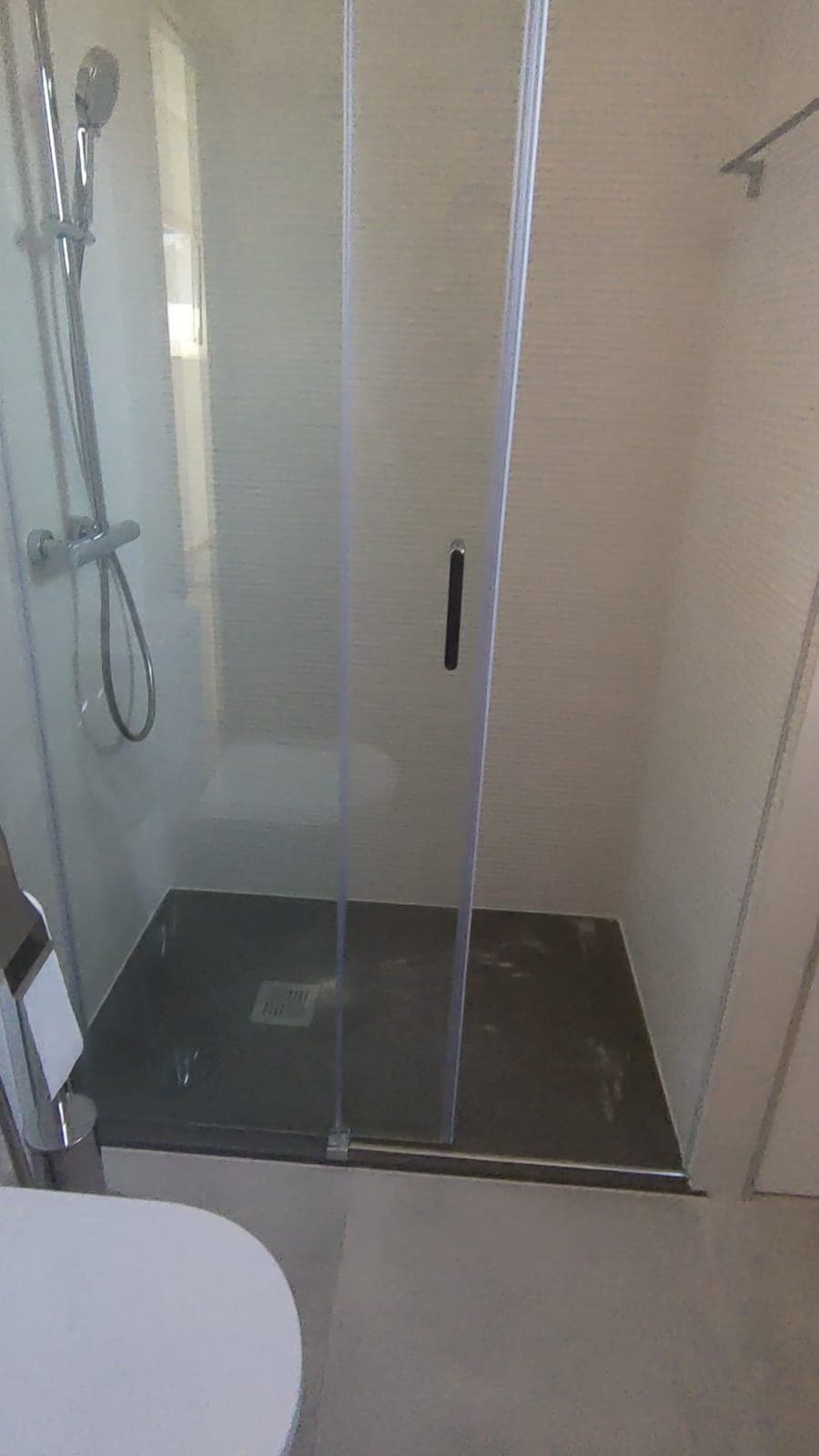
Bath to shower conversion
New waste, flush-to-floor tray and thermostatic tap, solving the fall in very little depth.
How we install new plumbing
The first step is understanding the starting point: the material of the existing pipework, the pressure coming in, where the stacks are and whether the building has an individual or communal meter. In many pre-1990s flats in Dénia and Gandía we find galvanised iron with the bore narrowed by limescale; there, the decision to replace is an easy one.
Once the strip-out is done, we route the hot and cold lines along the shortest path, chased into the walls or through the suspended ceiling where there is one. We use multilayer pipe in most bathrooms and kitchens (as we did in the complete renovation with two bathrooms in Dénia, with all-new plumbing) and heat-fused PPR for risers and larger homes. We insulate the hot-water pipe so it does not warm the wall and lose heat along the way.
Waste runs are in PVC with the minimum fall each section needs, accessible traps and a rodding point wherever possible. For flush-to-floor shower trays, the drain is chosen to suit the tray (linear, central or corner) and the available depth is checked before anything is fixed.
The concealed tap bodies go in level and at the depth the manufacturer specifies, allowing for the thickness of the tile and the adhesive. A millimetre too far out and the trim plate will not sit; a millimetre too far in and the rosette is sunk into the wall. With that done, we charge the system and carry out the pressure test. Only when it holds do we tile.
At the end, the sanitaryware and visible taps are fitted, the wastes connected and everything sealed. In the bathrooms in Dénia where we only fitted sanitaryware and taps, the holes in the porcelain tiles were drilled with a water-cooled diamond bit so that not a single tile cracked.
Materials and solutions we recommend
- Multilayer pipe with press fittings for internal distribution: it does not corrode, does not scale up, bends without elbows and goes in quickly.
- PPR where there are long hot-water runs or risers serving several floors, for the reliability of the fused joint.
- Wall-hung WC frame with concealed cistern: easy to clean, space gained, and the boxing-in gives you a niche above it, as in the bathroom with a bath in Jávea.
- Thermostatic taps in showers used by children or older people: fixed temperature and no nasty surprises.
- Isolation valves in every bathroom and kitchen, something that almost never exists in older flats and saves you shutting off the water to the whole house.
- Pressure-reducing valve at the inlet when the mains arrives with too much pressure, common in low-lying parts of Dénia and some urbanisations.
If you want to save money, the visible taps and the vanity unit can come from more affordable ranges without affecting the installation. Where we do not cut corners is on the pipework, the fittings and the concealed valve bodies: replacing those later means breaking out the tiling.
Common mistakes we avoid
- Joining new pipe to an old iron section without the proper adaptor: the galvanic couple corrodes the joint and the leak appears inside the wall.
- Shower waste with no fall, or a trap too tall for the chosen tray. The result: water that will not drain, or a step nobody wanted.
- Tiling without a pressure test. If there is a leak, it gets discovered by the stain on the neighbour's ceiling.
- Concealed valve body set at the wrong depth relative to the tile. The most expensive tap in the catalogue ends up crooked and loose.
- Forgetting the hot-water return loop in larger houses: minutes waiting for hot water in the furthest bathroom.
Indicative timescales
- Plumbing for one bathroom as part of its renovation: around 3 working days split across two phases (installation and final fitting).
- Kitchen: 1 or 2 days, plus fitting the sink and appliances at the end.
- Replacing the entire network in a 90 m² flat during a complete renovation: 5 to 7 days, coordinated with the building work.
- Villa with several bathrooms and a hot-water cylinder: from two weeks.
Every timescale is adjusted in the itemised quote, and if the renovation is complex we would rather take a few days to work it out properly than give you a figure off the top of our heads.
Plumbing for homes in Dénia, Jávea and Gandía
The water in the Marina Alta and La Safor is hard. Limescale narrows old iron pipes and punishes water heaters, taps and shower heads. That is why we propose materials that do not build up scale and, if you want it, a water softener or at least a filter at the inlet.
In beach apartments that sit closed for months, the traps dry out and the smells come up. Fitting the right traps and a main stopcock reachable from inside the flat avoids an unpleasant welcome when you come back in summer. It is also common to find electric water heaters hanging on terraces with the salt air doing its work; we move them inside or replace them with an aerothermal system when the renovation allows.
In country houses around Pego, Ondara or inland Jávea you find storage tanks, booster pumps and wells. There, the plumbing starts before the stop valve, and it is worth checking the pump set and valves as part of the same renovation.
If you will not be at the property during the work, we send you photos of the installation with the pressure test done before tiling. For any renovation involving plumbing in Dénia, Jávea, Gandía or the surrounding area, tell us what you need and we will look at it on site.
How we work
Visit
We visit your home with no obligation, take measurements and listen to what you need.
Itemised quote
Line by line and in writing. A small job is priced quickly; a complex one may take a few days.
The work
Yuriy coordinates the trades and is on site. Any changes are priced before they are made.
Handover
We go over the work with you, clean up and hand it over ready to use.
Frequently asked questions about plumbing
Multilayer or PPR? Which is better?
Both are good when installed properly. Multilayer (polyethylene with an aluminium core) bends by hand, holds its shape and uses press fittings, which makes it fast and clean in renovations. PPR is joined by heat fusion, so it is genuinely welded, and it is very reliable on long runs and hot water. We tend to use multilayer in bathrooms and kitchens and consider PPR for risers and larger homes.
Do I have to replace all the pipework in the flat if I am only renovating the bathroom?
It is not compulsory, but it is worth renewing at least the run from the bathroom stop valve to each fitting. If the main pipework is galvanised iron and you have low pressure or rusty water when you open the tap, we will suggest replacing the run from the main stopcock too, because that is the part that is going to give you trouble.
Can the toilet or the shower be moved?
Almost always. The limit is the waste: a WC needs a 110 mm pipe with a fall to the stack, and a flush-to-floor shower needs depth for the trap. In flats with a thin floor slab, sometimes the floor has to be raised a few centimetres or you choose an ultra-slim tray. We measure it on the site visit before promising anything.
What test pressure do you use and why does it matter?
We charge the water system to a pressure well above its working pressure and leave it for a while, watching the gauge. If it drops, there is a leak, and it gets found while the wall is still open. It is the only way to tile with peace of mind.
How long does the plumbing for a bathroom take?
The bulk of it (pipework, waste runs, WC frame and concealed valve bodies) is done in 1 or 2 days once the bathroom has been stripped out. Fitting the sanitaryware and the visible taps comes at the end, once the tiling is finished, and takes another day. In total, plumbing accounts for about 3 days of a two-week bathroom renovation.
Will you fit taps I buy myself?
Yes. We ask you to send us the model before we start, because a concealed shower valve body has to go in before tiling and every brand has its own depth and dimensions. With the technical sheet in hand we avoid discovering on fitting day that the trim plate does not reach the wall.
Plumbing near you
We work in Dénia, Jávea and surroundings: Dénia, Jávea / Xàbia, Gandía, Ondara, Oliva, Pego, Benissa, Moraira, Calpe and the surrounding area.
Shall we talk about your renovation in Dénia, Jávea and surroundings?
Tell us what you need in terms of plumbing. Free visit and quote, no obligation.